Product Description
pneumatic rubber fender introduction.
what is pneumatic rubber fender introduction?
The "Yokohama Type Pneumatic Rubber Fender" was developed in 1958. Progress in the development of such floating pneumatic rubber fenders is closely related to the progress and development of ship technology, and has to continuously cope with progressively larger oil tankers such as VLCC's, ULCC's, large gas carriers, bulk carriers and floating structures. Floating pneumatic fenders are used world wide for ship-to-ship (STS) transfer operations, terminals, and for all kinds of ships. Since its creation until today, more than millions of fenders have been supplied worldwide both for ship-to-ship and ship-to-dock (STD) operations serving our valuable customers. These fenders play a critical role in the safe operation of ship berthing and mooring
How does the aero fender work?
The pneumatic fender or inflatable rubber fender or Yokohama fender compressed air is used as a buffer medium to absorb the impact energy of the ship, so that the ship has more flexibility and flexibility when docking, so as to prevent The impact of collisions .
What type do we have?
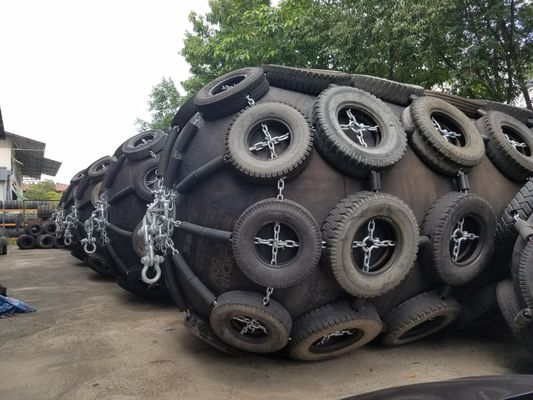
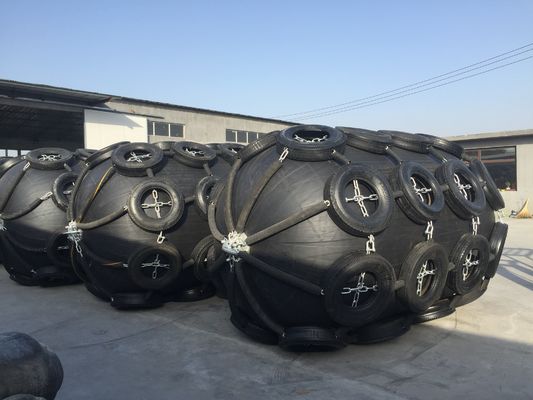
Tire net type: multiple tires are tied to the ball, and both ends are tied to a special flywheel that can rotate flexibly. Suitable for large and reliable balls.
Rubber net type: tie a special rubber pad to the ball, which can be freely contracted or stretched when squeezed. Suitable for medium and small reliable balls.
Line type: The net cover is woven with nylon rope; tightly tied to the ball. It is suitable for small size reliable balls.
Specification parameter table:
| Pneumatic 50 fender size and performance requirements |
|
Nominal size diameter x length
mm
|
Initial internal pressure
kPa
|
Guaranteed energy absorption (GEA) |
Reaction force at GEA deflection(R) |
Hull pressure (Internal pressure) at GEA deflection (P) |
| Minimum value at deflection 60±5% kJ |
Tolerance±10 % kN |
Reference value
kPa
|
| 500 x 1000 |
50 |
6 |
64 |
132 |
| 600 x 1000 |
50 |
8 |
74 |
126 |
| 700 x 1500 |
50 |
17 |
137 |
135 |
| 1000 x 1500 |
50 |
32 |
182 |
122 |
| 1000 x 2000 |
50 |
45 |
257 |
132 |
| 1200 x2000 |
50 |
63 |
297 |
126 |
| 1350 x 2500 |
50 |
102 |
427 |
130 |
| 1500 x 3000 |
50 |
153 |
579 |
132 |
| 1700 x 3000 |
50 |
191 |
639 |
128 |
| 2000 x 3500 |
50 |
308 |
875 |
128 |
| 2500 x 4000 |
50 |
663 |
1381 |
137 |
| 2500 x5500 |
50 |
943 |
2019 |
148 |
| 3300 x 4500 |
50 |
1175 |
1884 |
130 |
| 3300 x 6500 |
50 |
1814 |
3015 |
146 |
| 3300 x 10600 |
50 |
3067 |
5257 |
158 |
| 4500 x 9000 |
50 |
4752 |
5747 |
146 |
| 4500 x 12000 |
50 |
6473 |
7984 |
154 |
| Pneumatic 80 fender size and performance requirements |
|
Nominal size diameter x length
mm
|
Initial internal pressure
kPa
|
Guaranteed energy absorption (GEA) |
Reaction force at GEA deflection (R) |
Hull pressure (Internal pressure) at GEA deflection (P) |
| Minimum value at deflection 60±5% kJ |
Tolerance±10% kN |
Reference value
kPa
|
| 500 x 1000 |
80 |
8 |
85 |
174 |
| 600 x 1000 |
80 |
11 |
98 |
166 |
| 700 x 1500 |
80 |
24 |
180 |
177 |
| 1000 x 1500 |
80 |
45 |
239 |
160 |
| 1000 x2000 |
80 |
63 |
338 |
174 |
| 1200 x 2000 |
80 |
88 |
390 |
166 |
| 1350 x 2500 |
80 |
142 |
561 |
170 |
| 1500 x 3000 |
80 |
214 |
761 |
174 |
| 1700 x 3000 |
80 |
267 |
840 |
168 |
| 2000 x 3500 |
80 |
430 |
1150 |
168 |
| 2500 x 4000 |
80 |
925 |
1815 |
180 |
| 2500 x 5500 |
80 |
1317 |
2653 |
195 |
| 3300 x 4500 |
80 |
1640 |
2476 |
171 |
| 3300 x 6500 |
80 |
2532 |
3961 |
191 |
| 3300 x 10600 |
80 |
4281 |
6907 |
208 |
| 4500 x 9000 |
80 |
6633 |
7551 |
192 |
| 4500 x 12000 |
80 |
9037 |
10490 |
202
|

Pneumatic rubber fender Features:
1. Guaranteed energy absorption
2. Chain tyre net and sling type
3. Thick skin construction
4. Good angular performance
5. Less surface pressure onto the side wall of ships. (The capability of accepting surface pressure of the fender is up to 14 ton/m2).
6. No reduction on the performance of compression when inclined.
7. Suitable for areas with large or small tides.
8. Suitable in cold weather because the compressed air as buffering medium.
9. Especially in mooring of large scale ships in sea docks and lightering.
10. Maintains large clearances between hull and structure
Comparison of Henger Pneumatic Rubber Fender and traditional elastic rubber fender:
1. High impact energy absorption, low impact force on the ship
2. Simple installation
3. Good elasticity, no deformation under the action of compression
4. Lightweight, practical and economical
Pneumatic Rubber Fender Applications:
1. Oil and gas tankers
2. Fast ferries and aluminum vessels
3. Temporary and permanent installations
4. Rapid response and emergencies
5. In ports with extreme tidal variations
6. For ship-to-ship lightering operations
7. For all navy vessels due to low hull pressure and the advantage of a proportional increase of reaction force and energy absorption
Progress and development of ship technology, and has to continuously cope with progressively larger oil tankers such as VLCC's, ULCC's, large gas carriers, bulk carriers and floating structures.
Floating pneumatic fenders are used world wide for ship-to-ship (STS) transfer operations, terminals, and for all kinds of ships.
Since its creation until today, Henger more than 10,000 fenders have been supplied worldwide both for ship-to-ship and ship-to-dock operations serving our valuable customers.These fenders play a critical role in the safe operation of ship berthing and mooring.
Service and transportation:
The product warranty period of Henger is 24 months, and the average supplier can not reach such a long time, which is also the trust we and customers have in our factory products.
After-sales service we are online 24 hours a day, as long as you have questions we will always be there, there will be professional staff to answer your questions and provide you with technical support.
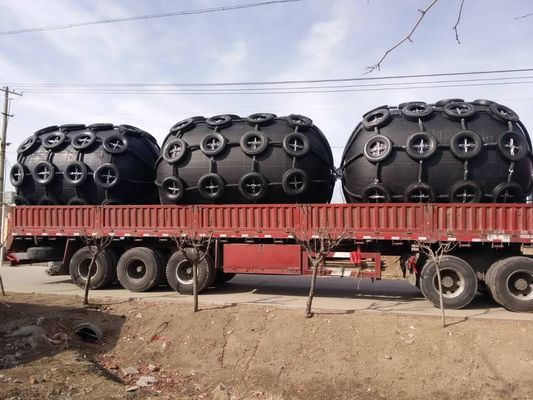
Transportation We can take the deflation pallet transportation and the entire fender transportation without deflation according to the requirements of customers. We always put the customer's requirements first.
Thank you for reading. If you have any needs and interests, you can contact me.

 english
 français
 Deutsch
 Italiano
 Русский
 Español
 português
 Nederlandse
 ελληνικά
 日本語
日本語
 한국
한국
 العربية
 हिन्दी
 Türkçe
 indonesia
 tiếng Việt
 ไทย
ไทย
 বাংলা
বাংলা
 فارسی
فارسی
 polski